
The Minimum Viable Brand: What you actually need at idea stage




Subscribe to receive Elixir news to your inbox every two weeks.

Expand your skills
Download free e-books, watch expert tech talks, and explore open-source projects. Everything you need to grow as a developer - completely free.
What branding do early-stage startups really need? Learn how to create a minimum viable brand – the key design, voice, and identity essentials for idea-stage startups – and what to skip until you have traction.
Feeling pressure to craft a perfect brand while your startup’s still just an idea? You’re not alone. Early-stage founders and tech leads often think they need a slick logo, polished site, and pro-level identity—before anything’s built.
But here’s the truth:
At the idea stage, you don’t need a full brand. You need a Minimum Viable Brand—just enough to look real, communicate clearly, and avoid looking like a side project.
Think: clean, consistent, legible. Not flashy. Not corporate cosplay.
What is a “Minimum Viable Brand” (and why should you care)?
If you understand Minimum Viable Product (MVP), you get the idea: do the least necessary to deliver value and learn fast. Minimum Viable Brand (MVB) is the same thing - for branding.
Instead of hiring an agency and obsessing over color palettes, MVB means pulling together just enough brand to look legit, communicate clearly, and get feedback.
Why now? Because even pre-launch, someone’s going to see your product: early users, angel investors, collaborators. You need a baseline:
- A clear message
- A solid-enough name
- A clean, consistent visual vibe
That shows you’re serious. It earns attention. It builds trust.
But your brand also needs to bend. Your product might pivot. Your audience might shift. So instead of locking into a full identity system, MVB gives you just enough structure to look real, and enough flexibility to evolve.
Think:
- A simple logo you made in Figma
- A one-liner that explains what you do
- A color + font combo that doesn’t make people flinch
- A tone of voice that sounds like a human, not a committee
It’s the skateboard version of your brand - enough to get rolling and learn fast. Get it out there. Let real people react to your look, name, and pitch. Then improve.
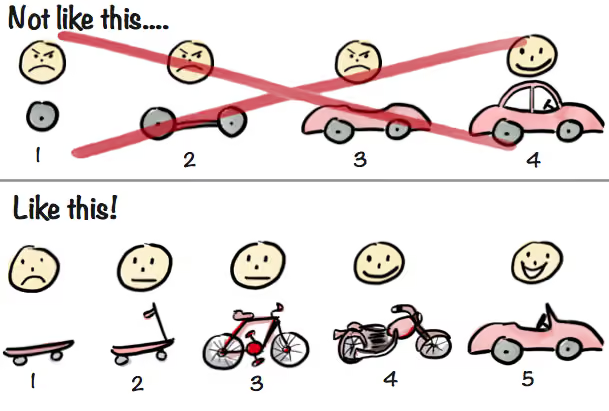
Shift your mindset: Think like a lean Founder, not a brand manager
Branding at idea stage isn’t about perfect polish. It’s about making just enough effort to be understood and taken seriously—without slowing yourself down.
Embrace “Good Enough”
Perfection is a trap. Your brand will evolve, and that’s okay. Most early-stage startups start with an MVP-level brand just enough to show you’re real, not enough to get stuck.
As one founder put it:
We don’t know the market well enough yet to get the brand right—whether we spend $5K or $50K.
So, you’re building a placeholder that gets you moving.
Prioritize learning over polishing
Your brand is a set of hypotheses: name, tone, message. Don’t treat them as sacred. Test and tweak just like you would a product. Think: build – measure – learn, but for branding. Don’t overcommit to a narrative that may not land with users.
Don’t over-brand a moving target
If you might pivot three times in six months, investing in a rigid brand system is a waste. Keep it simple, editable, and easy to change. Avoid assets that lock you in (like printing 5,000 business cards with a name you might change).
Your product is your brand (for now)
Branding is how people experience your product. A solid UX and clear onboarding do more for your brand than a shiny logo ever could. Users forgive scrappy visuals if the value is real. Focus on function over flourish.
Be real, not corporate
Looking “too polished” can backfire. People want to support scrappy underdogs, not mini-fortunes. Speak like a human. Use language you can back up. Authenticity builds trust faster than buzzwords ever will.
To sum up the mindset: be lean, be flexible, be real. Your early brand is a hypothesis, not a monument. Think of it as clay, not marble – something you’ll mold over time. And remember, many of today’s famous brands started with embarrassingly simple branding. The original Apple and Microsoft logos from the 1970s looked like DIY projects. Twitter’s first logo was a goofy green wordmark that said “twttr”. Airbnb started as “AirBed & Breakfast” with a chunky bubble-letter logo (straight out of a 2008 website template kit).
And you know what? It didn’t stop them from becoming multi-billion dollar companies. Awkward, amateur-looking early brands are practically a startup rite of passage. So give yourself permission to keep it simple – you’re in good company.
The essentials: what do you need at idea stage?
You don’t need a full visual identity or a 40-page tone guide. You just need enough brand to look real, communicate clearly, and not contradict yourself at every turn. That’s it.
Start with a one-liner that makes sense to strangers
If someone asks what your startup does and you launch into a two-minute ramble full of buzzwords, you’ve already lost them. Your value proposition should fit in one clear sentence. That’s your brand’s sharpest edge.
“15-minutes meal kits for busy parents.”
That’s it. No slogans. No wordplay. Just a simple answer to: “Why should someone care about this?”
This one-liner will sneak into your website headline, your deck, your intro emails, your pinned tweet. So don’t move on until it lands. Say it out loud. Try it on people. See if they get it or glaze over. Then refine until the lights go on.
Can’t crack it? Answer these three questions:
- What problem are we solving?
- How do we solve it?
- What makes us different?
Then compress that into a sentence a smart stranger could repeat at a party.
Build a visual identity that’s cohesive (not complicated)
People judge with their eyes. Even the most brilliant idea can feel shaky if your logo looks like it came from a 2006 PowerPoint template. That doesn’t mean you need to hire a design studio. But you do need to look deliberate. For your logo, a simple wordmark is often enough. Pick a clean font. Write your name. If you want to add a tiny symbol or mark, go for it, but it’s not essential. Plenty of startups launched with nothing more than their name in Helvetica.
Next: color. Choose one main color that reflects your vibe. Add a neutral—like white, gray, or navy—for balance. You don’t need a 12-color palette with hex codes for hover states. You need something that looks good and doesn’t scream “template.” Same with fonts. One for headlines, one for body text. Make sure they’re legible. If you’re feeling wild, pick one unique font for headlines and stick with system fonts for everything else. Consistency will do more for your credibility than any individual design choice.
Once you’ve made these calls, write them down. Doesn’t need to be a deck. A short doc works: “Logo: [Font Name], Color: #001F3F, #FF851B, Font: Montserrat for headings, Arial for body.” Share it with your cofounder, your developer, or whoever’s helping you. This way, everything starts to look like it came from one brain. No need for a design system. If you're asking whether you need one, the answer is no. Grab a UI kit or component library and move on. You’ll get to Figma tokens and atomic components later. Right now you’re building trust, not scaling design ops.
Sound like a real person (on purpose)
Voice is what makes your copy feel human - or robotic. And early users don’t just notice what you say, they notice how you say it. Spend 20 minutes defining how your brand talks. Not for the sake of “branding,” but so your emails, landing page, and social posts don’t feel like they came from five different startups.
Picture your brand as a person. Are they laid-back? Thoughtful? Witty? Direct? Pick two or three traits. Write them down.
Then write a sentence that helps clarify the tone. Like:
We’re helpful and informal, but not silly. We use plain language, not startup jargon. We’re warm, not overly polished.
Even if you’re writing everything yourself for now, documenting this makes it easier to scale later - and helps you stay consistent under pressure.
Again, you’re not writing a style guide. You’re just making sure your voice doesn’t shapeshift week to week. You’ll also want a short “boilerplate” description - a paragraph version of your one-liner. This goes in your About section, your investor doc, or the email you send to someone you want to partner with. Keep it simple. “We help X solve Y by doing Z” is enough. Add one or two supporting facts if you’ve got them, like beta users, pilots, or a key differentiator.
Make yourself Google-able
This one’s obvious, but often skipped: people will search for you. Make sure they find something. Even a basic landing page with your logo, value prop, and an email signup form makes a huge difference. It signals “this exists,” which is what you need. Bonus: it forces you to make all the branding choices above work together in one place.
Make sure your one-liner is front and center. Make sure your visual identity doesn’t fall apart. Make sure your tone matches your voice. If someone lands on your site cold and understands who you are, what you’re building, and why they should care, then congrats - you’ve nailed your Minimum Viable Brand.
What you DON’T need (yet)
Just as important as knowing what to build is knowing what to skip. At the idea stage, founders often waste time or money on branding flourishes that don’t help you learn, grow, or build trust. You can confidently delay these:
- A complex logo or “visual identity system.”: A clean wordmark in a decent font is more than enough. No icon sets, animated symbols, or sub-brands needed. A simple logo beats an overdesigned one at this stage.
- Extensive color palettes or custom illustrations: Two core colors and maybe a neutral - done. Skip gradients, shadows, tertiary palettes. You also don’t need a character mascot, icon suite, or illustration set. Use free assets if needed, or keep the interface clean and visual-light.
- Brand books or full brand guidelines: Don’t spend time making a 30-slide deck on your brand voice. One page with your font, colors, tone, and logo usage is plenty. Anything more will be out of date in a month anyway.
- A full-blown design system: Tailwind, Bootstrap, or your favorite UI kit already does the job. You’re not Google. Don’t waste a sprint documenting every spacing rule or button variant. Just be consistent and reuse as you go.
- Marketing collateral and swag: No brochures, flyers, one-pagers, or pitch decks with custom design. If you’re fundraising, a clean PDF deck using your core styles is fine. T-shirts and stickers can wait until you’ve earned something worth celebrating.
- Multiple social accounts or a content strategy: Don’t try to “build a presence” across five platforms. Pick one where your audience lives, pin a clear intro post, and move on. Your job is to build and talk to users - not post #MondayMotivation.
- Pixel-perfect product UI: Your MVP should be usable and not look like a scam. It doesn’t need dark mode, hover states, or microinteractions. Polish is nice later. Early on, focus on clarity and trust.
When to Level Up Your Brand
Don’t upgrade because you’re bored, upgrade because it’s holding you back.
You don’t need a full rebrand early - but you will outgrow your starter brand eventually. Here's how to know when it's time to step things up:
- You’ve hit product-market fit: If users are sticking around, revenue’s flowing, and things are clicking, your brand should catch up to your momentum. Many founders invest in brand around their first funding round or key growth milestone.
- You’re serving more people - or different ones: Maybe your cute, scrappy vibe worked for early adopters, but now you're selling to CFOs. Or your “SeattleBikeShare” brand makes less sense now that you’re in 10 cities. Expanding markets often call for a more polished, flexible identity.
- You’re going enterprise or international: Bigger customers or new regions bring new expectations. You might need localized messaging, stronger design assets, or brand guidelines for partners and press.
- You’re about to raise or announce funding: A major PR moment is often a good reason to upgrade your look and messaging. You’ll get more eyeballs - make sure what they see reflects where you're headed.
- Your brand is causing friction: Maybe your team’s winging it on visuals, or your logo looks like a meme. If sales needs better materials or your designers are reinventing buttons every sprint, you’ve outgrown your MVB.
The key: don’t upgrade because you’re bored, upgrade because it’s holding you back. Brand maturity should match business maturity. Walk first. Run when it helps.
In summary, adopting a Minimum Viable Brand mindset at the idea stage is about being strategic with your limited resources. You focus on the essential elements that matter for early success and cut out the rest. You’re not neglecting brand; you’re trimming it to the critical pieces that will support your startup’s growth now. Think of it as laying a small but solid foundation – you can build the cathedral of a brand later, once you know where you’re going. For now, you need a sturdy little house that does the job.
Many founders have walked this path. They started with a name scribbled on a PowerPoint, a free theme website, and a value prop that evolved over coffee chats with early users. That’s normal. Your minimum viable brand is enough to get you going and learning. Execute those basics well, and you’ll have a cohesive, professional presence that punches above its weight.
Keep it simple, stay focused, and get your idea out into the world – that’s what matters most right now. Good luck, and happy branding (the lean way)!
Great design makes great products. Let’s make yours stand out.
Related posts
Dive deeper into this topic with these related posts
You might also like
Discover more content from this category

Launched your MVP? Learn how to prioritize fixes, embrace user feedback, and skip over-polishing. Essential post-launch tips for startup founders,

Discover why UX/UI design is critical for digital product success.

Startup founder or PM? Wondering if it’s time for a design system? Read practical advice on balancing design consistency and speed, and how polished your product should be.